Battles
Introduction
During the Great War, a huge number of battles took place. This page has a list of the most important and interesting battles.
- Battle of the Marne
- Battle of Verdun
- Battle of the Somme
- Battle of Vimy Ridge
- Battle of Osowiec Fortress/Attack of the Dead Men
- Baytle of Tannenberg
- Gallipoli Campaign
Battles
Battle of the Marne
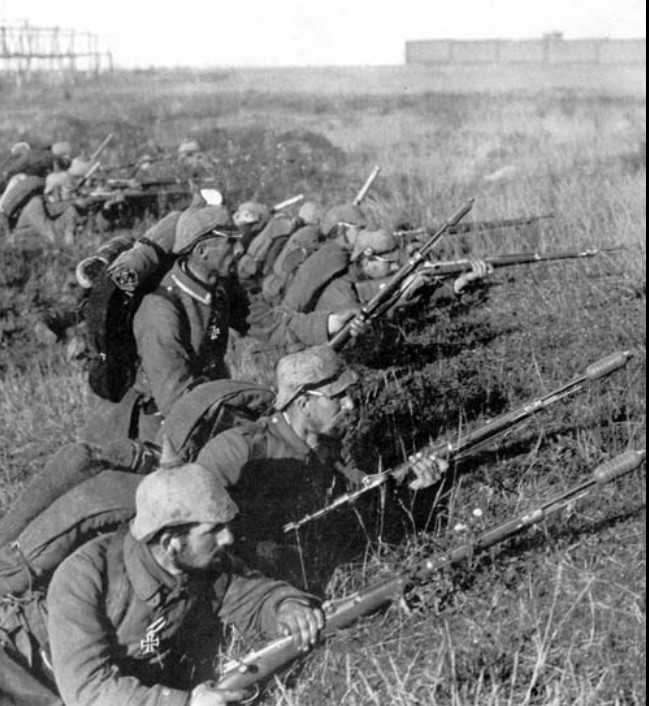
Source: https://en.wikipedia.org/wiki/First_Battle_of_the_Marne#
/media/File:German_soldiers_Battle_of_Marne_WWI.jpg
by unknown, public domain, 1914.
The Battle of the Marne was fought from 5th to 14th of September, 1914 between the German Empire and a combined army of
French and British troops. The battle was located near the Marne river in France. The battle ended in victory of France
and Britain. This battle resulted in the shift from maneuver warfare of the first few months of the war
during the Schlieffen plan, into the deadly stalemate known as trench warfare.
The Germans were initially extremely successful in overrunning French forces in the Schlieffen plan by attacking through
Belgium, a neutral country. The Germans were approaching Paris and if they were to reach the French capital, the war
on the western front would be over. The Battle of the Marne occurred 40km away from Paris. French and British forces
counterattacked German positions along the Marne river and were able to repel the Germans. This battle was an important
turning point and as such is also known as the "Miracle on the Marne".
| Entente Powers | Central Powers |
|---|---|
|
|
| Manpower | |
| 1,080,000 - Mostly French | 750,000 |
| Casualties | |
| 86,700 - Mostly French | 67,000 |
Battle of Verdun
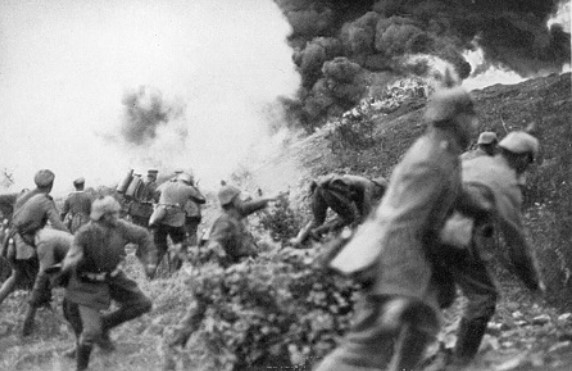
Source: https://study.com/academy/lesson/battle-verdun-history-importance.html by unknown, public domain, 1916
The Battle of Verdun was fought from 21st of February to 18th of December, 1916 between the German Empire and France.
The battle was located near the city of Verdun. The battle ended in a French victory. This was one of the largest battles of
the First World War. Millions of artillery shells were fired during the battle. Casualties were extremely high on both sides.
After the deadlock of trench warfare was formed, the Germans had realised that they could not decisively defeat the French so they
instead changed their strategy to attrition warfare (win the war by making the other side run out of manpower or resources). The Germans
decided to make the French "bleed out". The Germans lured in French troops by launching a massive offensive against a heavily
fortified area near Verdun.
The Germans began their assault with massive artillery bombardments. The French were incredibly resilient and held their ground against
the German assault. The French general swapped troops from the front-line every once in a while to keep troops fresh. The French and Germans
continued fighting until it was clear that no progress was being made and committed their resources in other areas.
| Entente Powers | Central Powers |
|---|---|
|
|
| Manpower | |
| 1,200,000 | 750,000 - 1,000,000 |
| Casualties | |
| 379,000 – 400,000 | 336,000 – 355,000 |
Battle of the Somme
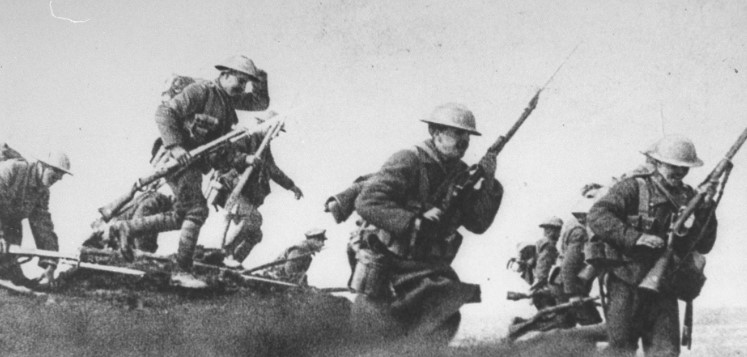
Source: https://www.history.com/topics/world-war-i/battle-of-the-somme, by unknown, public domain, 1916
The Battle of the Somme was fought from 1st of July to 18th of November, 1916. The battle was located near the Somme river.
The battle has no clear victor. This was one of the largest battles of the First World War. This was the battle where tanks
were first used in warfare.
As the Germans were launching a massive offensive at Verdun, British and French forces decided to relieve pressure off
Verdun by launching their own assault at the Somme. Before the battle, Britain heavily bombarded German positions with limited success.
Britain conducted the initial attack, crossing no man's land, on German positions and suffered severe casualties. On the first day
of the Battle of the Somme, Britain suffered 60,000 casualties as troops were mowed down by machine guns and barbed wire.
The Battle of the Somme showed the true brutality of trying to attack fortified positions in trench warfare. The tanks that were
deployed had limited success. They intimidated German forces and were able to break through barbed wire and machine gun positions.
However, the tanks were incredibly unreliable and broke down in the mud and were annihilated easily by artillery. Despite so many
losses in lives, no significant gains were made.
| Entente Powers | Central Powers |
|---|---|
|
|
| Manpower | |
| 2,500,000 | 1,000,000 |
| Casualties | |
| 620,000 - Mostly British | 440,000 |
Battle of Vimy Ridge
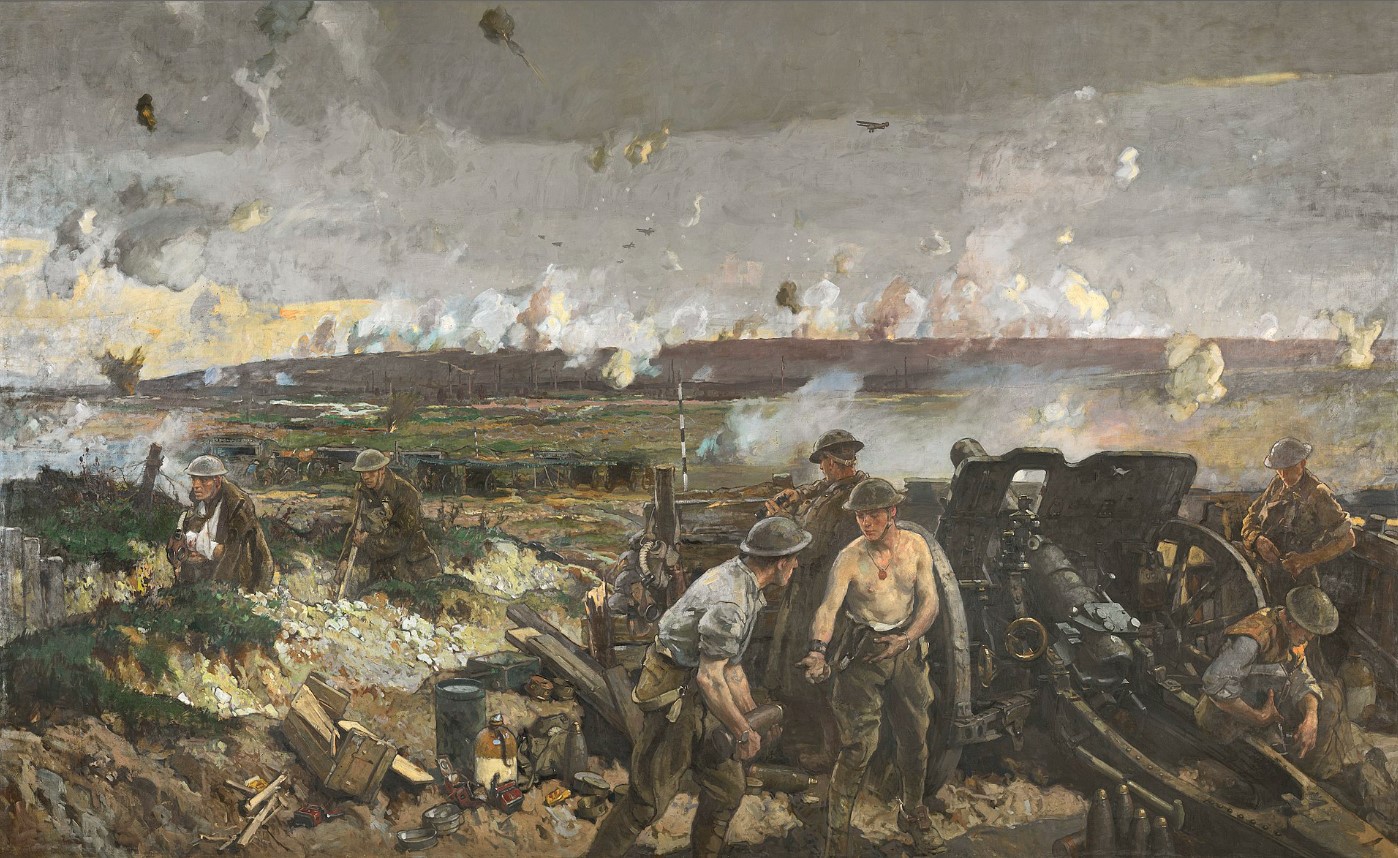
Source:https://en.wikipedia.org/wiki/Battle_of_Vimy_Ridge#
/media/File:Richard_Jack-The_Taking_of_Vimy_Ridge_(CWM_19710261-0160).jpg
The Taking of Vimy Ridge, by Richard Jack, 1919.
The Battle of Vimy Ridge was fought from 9th to 12th of April, 1917. The battle was located near Vimy in Pas de Calais. The battle was
won by Canadian troops, and thus the British Empire. This is the most famous battle that Canadians have played a major role in.
This battle is a smaller part of the Battle of Arras.
Vimy Ridge is an elevated fortified position held by German forces. The French and British armies have tried assaulting the ridge before,
but have failed. The Canadian Corps was tasked with capturing the Ridge due to its tactical importance. The Canadians utilised heavy
co-ordination and was able to perfect the creeping barrage (artillery bombardment that moves at the same speed as the infantry, allowing cover
for friendly infantry forces).
By the end, the Canadians were able to capture Vimy Ridge despite fierce resistance. Despite being on the offensive against fortified positions,
Canadian troops were able to inflict more casualties and secure a victory. This resulted in the Battle of Vimy Ridge heavily raising Entente
morale and increasing the national identity of Canada.
| Entente Powers | Central Powers |
|---|---|
|
|
| Manpower | |
| 170,000 | 30,000 - 45,000 |
| Casualties | |
| 10,602 | 20,000 |
Battle of Osowiec Fortress/Attack of the Dead Men
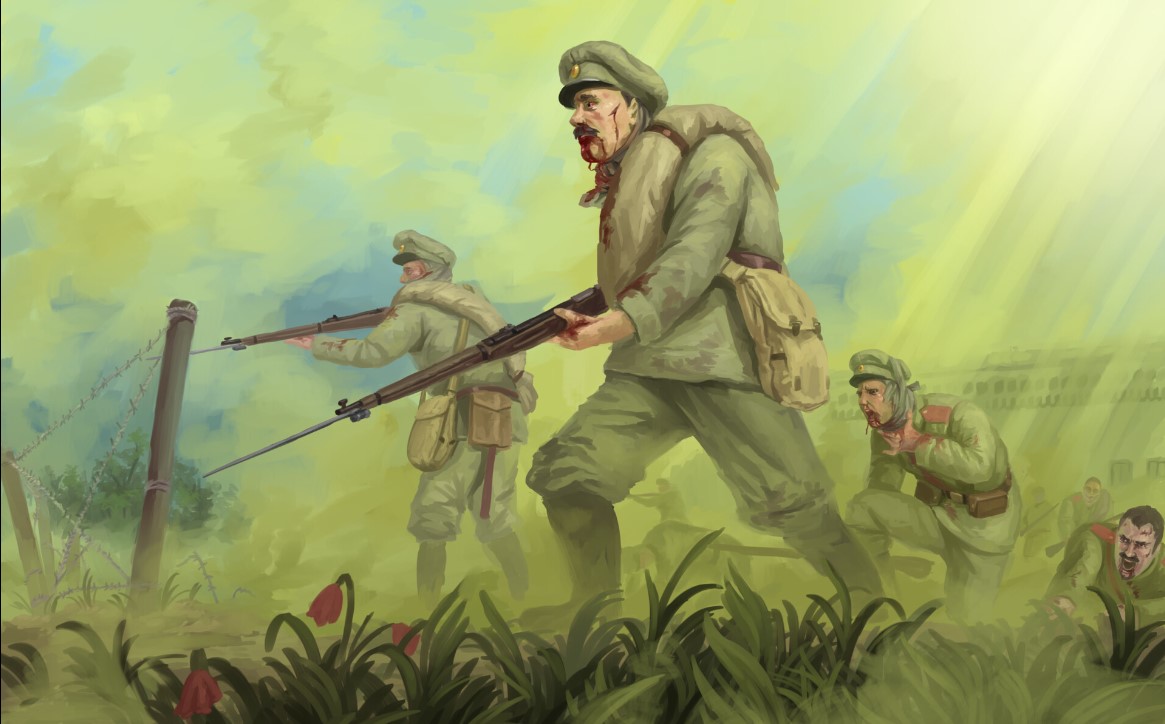
Source: https://www.artstation.com/artwork/ykZ42O, by Jonathan Kautzsch, 2021.
The Battle of Osowiec Fortress, also known as the Attack of the Dead Men, was fought on 6th of August, 1915. The battle was won by Russia and
was faught in Osowiec Fortress in northern Poland.
Although this is a really minor battle, it is one of the most interesting battles in WW1.
Osowiec Fortress was a heavily defended fort held by Russia. The Germans on many occasions attempted to capture the fortress but failed.
On 6th of August, 1915, the Germans conducted another assault. They shelled the fortress with artillery and then used toxic gas to kill the
Russian defenders inside of the fort. Many of the Russians died from the toxic gas.
German soldiers attempted to capture the fort after the bombardment and gas attacks. However, the remaining Russian garrison did a massive
counterattack in a suicide charge. The Russian survivors were bleeding and coughing pieces of their own lungs due to the gas attacks. Their
faces were covered with rotten flesh. The German soldiers thought they were zombies and were so scared they turned the other way and ran.
| Entente Powers | Central Powers |
|---|---|
|
|
| Manpower | |
| 900 | 7,000-8,000 |
| Casualties | |
| 800 | Unknown |
Battle of Tannenberg
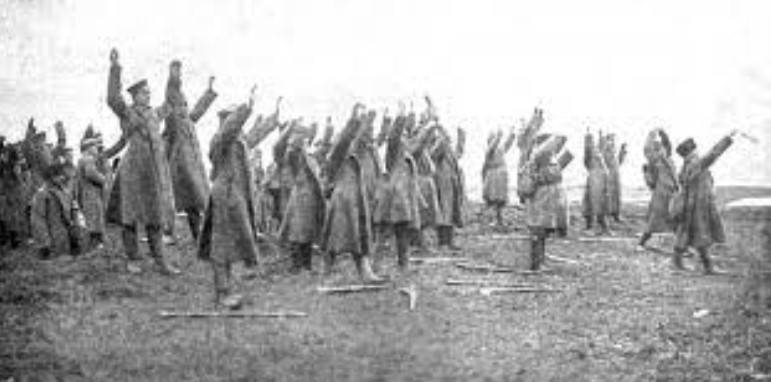
Source: https://www.cheshireroll.co.uk/thegreatwarbattle/battleoftannenberg, by unknown, public domain, 1914
The Battle of Tannenberg was fought from 23rd to 30th of August, 1914. The battle ended in a crushing defeat for Russia, and a major victory
for Germany. The battle was faught near the city of Allenstein.
This is one of the most one-sided battles of the entire war, with Russia suffering many times more casualties than Germany.
At the start of the war, Germany concentrated most of its force in France in order to quickly knock it out in the Schlieffen plan. Russia
promised to mobilize 800,000 troops within 15 days of mobilization despite Russia's cumbersome size. Soon after, the Russians began an attack
on German territory in order to relieve pressure from France. Due to the sudden massive mobilization, Germany was caught by surprise at the
size of the Russian army and had to divert troops from France to Russia. Germany was able to crack Russia's encrypted radio and after the
Russians realized, they decided to use the public radio instead and hoped that the Germans would just not pay attention.
The Russians outnumbered the Germans and planned on enveloping German forces with a pincer attack with the 1st and 2nd Armies.
However, the 1st Army had delayed the attack for a few days and the 2nd Army continued nonetheless. Germany was able to find out the movement
of Russian armies through the radio and with its superior rail system, co-ordination, and organization was able to engage the Russian army by
surprise. The Russians were unable to effectively fight back due to poor co-ordination, morale, and organization. As a result, they were
encircled and then utterly annihilated.
| Entente Powers | Central Powers |
|---|---|
|
|
| Manpower | |
| 230,000 | 150,000 |
| Casualties | |
| 122,000 – 170,000 | 13,873 |
Gallipoli Campaign
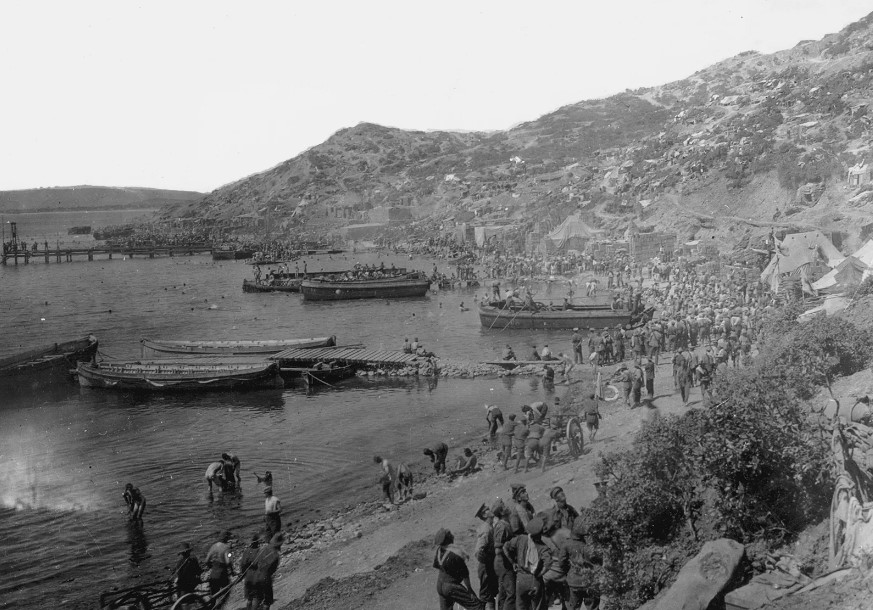
Source: https://www.britannica.com/event/Gallipoli-Campaign#/media/1/151500/110157, by Encyclopaedia Britannica
The Gallipoli campaign was fought from 19th of February 1915, to 9th of January 1916. The campaign ended in victory for the Ottoman empire.
The Gallipoli campaign were a series of battles faught in the Gallipoli peninsula, guarding the strait to the Ottoman capital of Istanbul.
After the Battle of the Marne, Trench warfare started and the western front was locked in a stalemate. The Ottomans
were at war with the Russians and had captured land in the Caucausus. The British also wanted a way to supply the Russians through the Black
Sea. As a result, the British devised a plan to capture Istanbul and knock the Ottomans out of the war. However, British attempts to capture
Istanbul have failed due to sea mines and Ottoman defensive positions along the Gallipoli peninsula.
As a result, the British launched an amphibious assault on the Gallipoli peninsula. British troops landed in Gallipoli in wooden row boats and
created a naval beachhead. The French landed elsewhere as a diversion. The Entente forces were unable to make significant
progress, as the situation mirrored that of the western front with trench warfare occurring in Gallipoli too. The rugged terrain and high
temperatures made the situation worse. Entente casualties increased and with the lack of reinforcements, forced them to retreat
| Entente Powers | Central Powers |
|---|---|
|
|
| Manpower | |
| 489,000 - Mostly British | 315,500 |
| Casualties | |
| 300,000 | 255,268 |